
Beyond the Backstop: Calculating the Space Needed for a Backyard Pitching Machine
For young ballplayers looking to take their game to the next level, the backyard is often the primary training ground. While throwing sessions and tee work are foundational, nothing replicates the speed and challenge of live batting practice quite like a mechanical Mound Yeti 2 Pitching Machine – Pitching Machine for Backyard. Installing one at home turns a casual playing area into a high-intensity training facility. However, bringing the professional feel of the ballpark into a residential setting requires more than just purchasing the machine; it demands careful planning regarding safety, mechanics, and spatial requirements. Before setting up a machine, understanding the total footprint—from the pitching mound to the distant outfield—is crucial for a safe and effective training environment.
The Minimum Linear Dimension: From Mound to Net
The most critical measurement for any backyard pitching machine setup is the straight-line distance from where the ball is released to where it is caught. While the machine itself takes up very little room, the trajectory of the ball dictates the necessary length of your space. For baseball, the standard professional distance from the pitching rubber to home plate is sixty feet, six inches. However, for youth players, this distance is significantly shorter, typically forty-six to fifty-four feet depending on the age group.
You must add a buffer zone behind the pitching machine for the operator, who needs room to stand, feed the balls, and adjust the settings. Furthermore, you require significant space behind the batter to catch the ball if it is missed. A safe backyard setup requires a minimum linear distance of roughly sixty to seventy feet for youth players, and closer to eighty feet for high school-aged players or adults using faster speeds. If your yard does not meet these minimum requirements, the risk of a ball traveling over a fence and into a neighbor’s yard, or worse, hitting a house window, becomes prohibitively high.
Width Requirements for Safety and Swing Path
While the length of the yard determines the speed and trajectory of the pitch, the width of the space determines safety and flexibility. You need enough width to accommodate not only the batter’s swing path but also a protective cage or netting system. If a ball hits the side of a fence, it can ricochet unpredictably, posing a danger to the operator or anyone else in the yard.
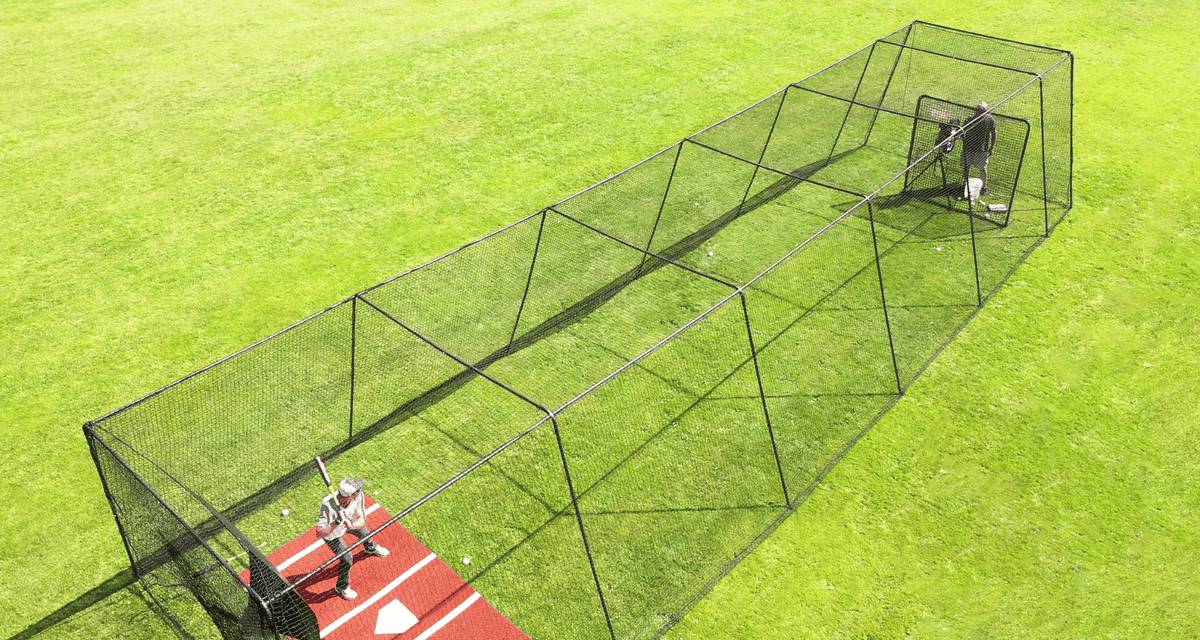
A minimum width of twenty to twenty-five feet is advisable. This allows for a ten-foot-wide batting cage, which is standard, with ample space on either side to maneuver. If you are not using a full cage, you need to consider the trajectory of foul balls. A machine set to throw strikes can still produce high-velocity foul balls that travel sideways. Ensuring you have a wide enough area prevents these balls from causing property damage or injuring bystanders.
The Importance of an Adequate Backstop and Netting
Even with the correct linear distance, a pitching machine is unsafe without proper containment. The netting system is not just there to catch the balls; it is designed to protect your property and ensure that the operator can work without fear of being struck by a foul ball. A high-quality, professional-grade batting cage net is the best solution, as it encloses the batter and the flight path of the ball.
If a full cage is not feasible, a large, portable pitching screen, often called an L-screen, is essential to protect the person operating the machine. Additionally, you need a substantial backstop behind the batter. This can be a heavy-duty net specifically designed to stop high-speed baseballs or softballs. The net should be at least ten feet high and ten feet wide to catch the vast majority of missed swings or passed balls. Failure to install proper netting turns a productive training session into a high-risk activity.
Conclusion
A backyard pitching machine is an exceptional tool for development, but it requires more space than many homeowners initially realize. Beyond just the distance from the mound to the plate, you must account for operator safety, ricochet buffers, and the installation of a comprehensive netting system. A functional, safe setup typically requires a length of at least seventy feet and a width of twenty feet, along with a stable, level surface for operation. By properly calculating your space and investing in the necessary safety infrastructure, you can turn your backyard into a professional-grade training ground that helps a young athlete reach their full potential safely.


